Hello! 😃
How have you been these days? I hope you have done well in your evaluations! Now it is time to start a new register, the last register of the semester. In register 2 we were describing students, now it will be the other way around, we will describe teachers.
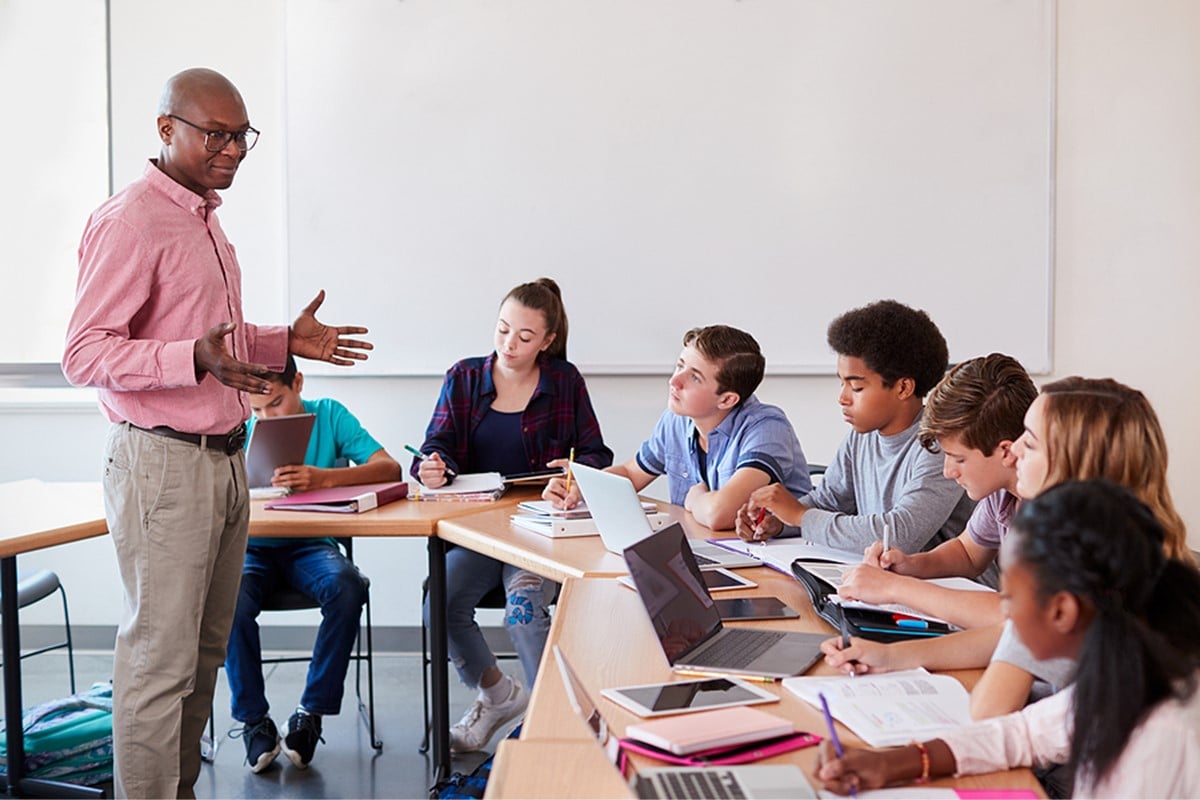
Teachers play an important role in society.
They are the ones who transmit knowledge, values, skills and virtues to
students. The school is the students' second home as they spend most of their
day there. That is why teachers become an important part of students' lives; they
can become role models. But how can we describe teachers? These are the aspects
to take into account:
- Teacher’s role in the classroom
The role of teachers in
the classroom is to impart knowledge, as I mentioned before. Teachers are the
top authority in the classroom.
-
As an organizer in prior a lesson
Teachers should prepare
in advance to teach a class so their students can learn in the best way. This gives
a teacher more quality time in the classroom.
-
As performers (activity-behavior)
Teachers must be
creative. No matter what topic is being talked about, if they do it in a
dynamic way it will catch the students' attention. Teachers vary their behavior
according to the activity their performing.
-
Their rapport
If
it is true that teachers are the authority and must be respected, they must be
approachable, they can inspire confidence in order to form a good
teacher-student relationship. In this way, students can feel free to
participate in class, ask questions and even share information about their
lives outside of school.
-
As teaching aids
The way teachers teach
their class and interact with their students is important. Their body language,
gestures, facial expressions, etc. must be taken into account. Without this, a
barrier is created that prevents the student from focusing on the class.
-
As native or non-native speakers
When teaching a language, teachers set the
example by speaking it, thus encouraging the student to practice it. They are a
source of motivation.
In addition, the teacher’s role in the
classroom is as follows:
A.
Controller
B.
Prompter
C.
Participant
D.
Resource
E.
Tutor
I had very good teachers in school and one in
particular was very good at teaching, but he had a bad temper. He taught
Grammar and Spelling; he was born in California but came to live here in El
Salvador. He obviously spoke English very well and we were forbidden to speak
in Spanish if we talked to him inside or outside the classroom. He was very
dynamic when teaching the classes so everyone was paying attention. But he was
also a little scary at times. Once on a test, a classmate looked sideways, I
couldn't tell if he was cheating or not, but this teacher snatched the test
from him and tore it in two in front of his eyes telling him he would get zero
as a final grade. Another time, he walked a classmate out of the classroom
because he didn't answer a question he asked. I think he was very shy and
didn't know the answer, but the teacher seemed furious.
I think he met all the descriptions of a
teacher except rapport. He used to have a stern face all the time and his bad
temper sometimes drove the students away. I had no problems with him; it was
the opposite. The subject he taught was my favorite so I tried my best to do
well. This teacher, at my graduation, told me that I would do well if I studied
something related to English like translation and here I am!
Teachers inspire and are very supportive to
students. They are the reason there are so many professionals out there. This
is how I conclude talking about this topic. See you later, alligator! (I just
learned it, it sounds cute)


Comentarios
Publicar un comentario